
TMJ Treatment in Raleigh, NC: Release Jaw Tension Without Injections
Release jaw tension and clenching without injections
- Common In:
- Adults 20 to 50, more women
- Primary Causes:
- Clenching, stress, bite, arthritis
- Treatment Time:
- 20 minutes
- Results:
- After 2 to 3 sessions

What Is TMJ and Jaw Tension?
Recognizing the Signs
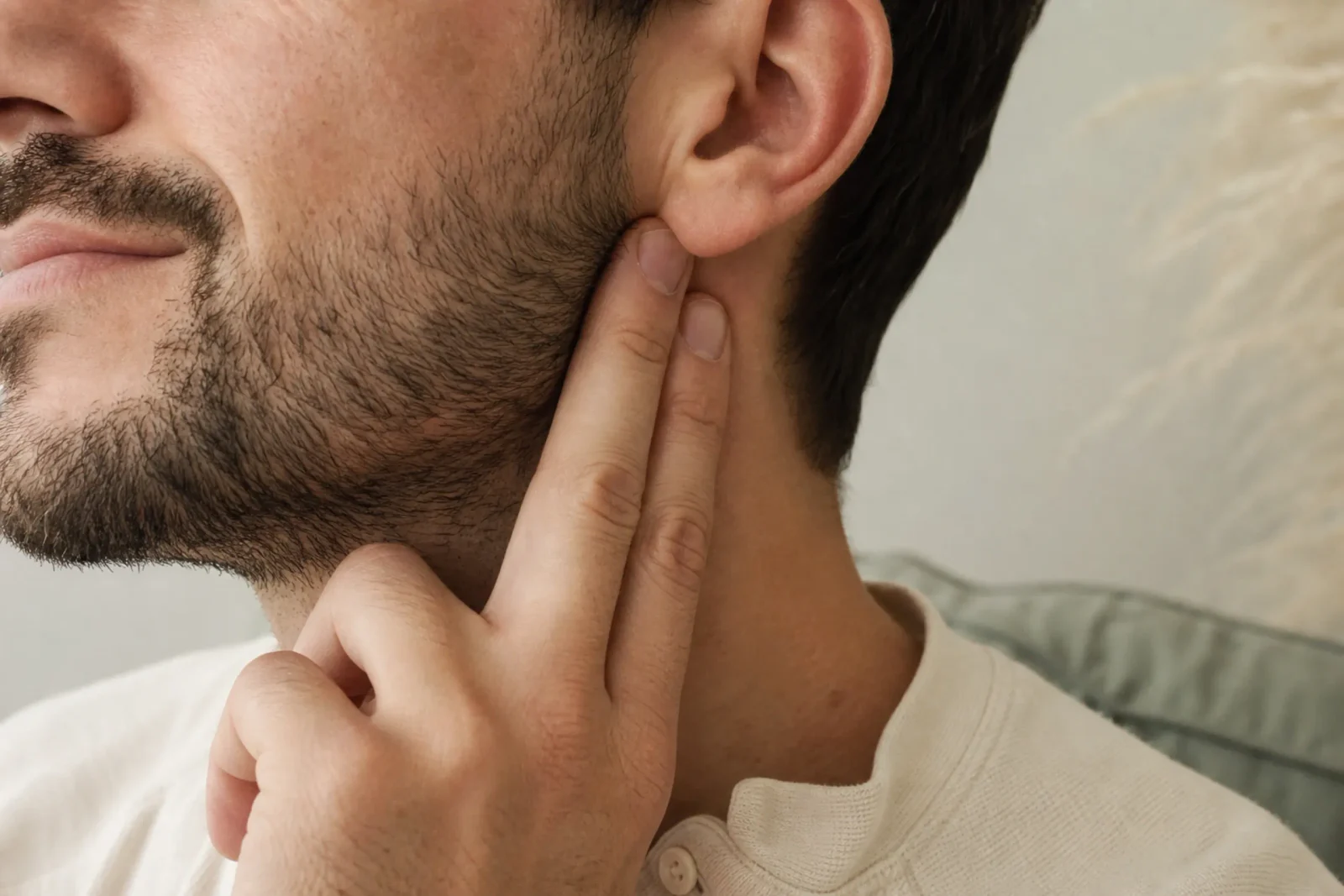
TMJ refers to the temporomandibular joint, the hinge connecting your jaw to your skull, and TMJ disorder describes pain and dysfunction in that joint and the muscles that move it. In practice most people use TMJ to mean jaw pain, clicking, clenching and the tension that comes with them.
It is common, affecting a meaningful share of adults at some point, and it is more frequently reported by women, particularly between 20 and 50. Many cases are muscular rather than structural, meaning the problem lies in the masseter and surrounding muscles rather than in the joint itself.
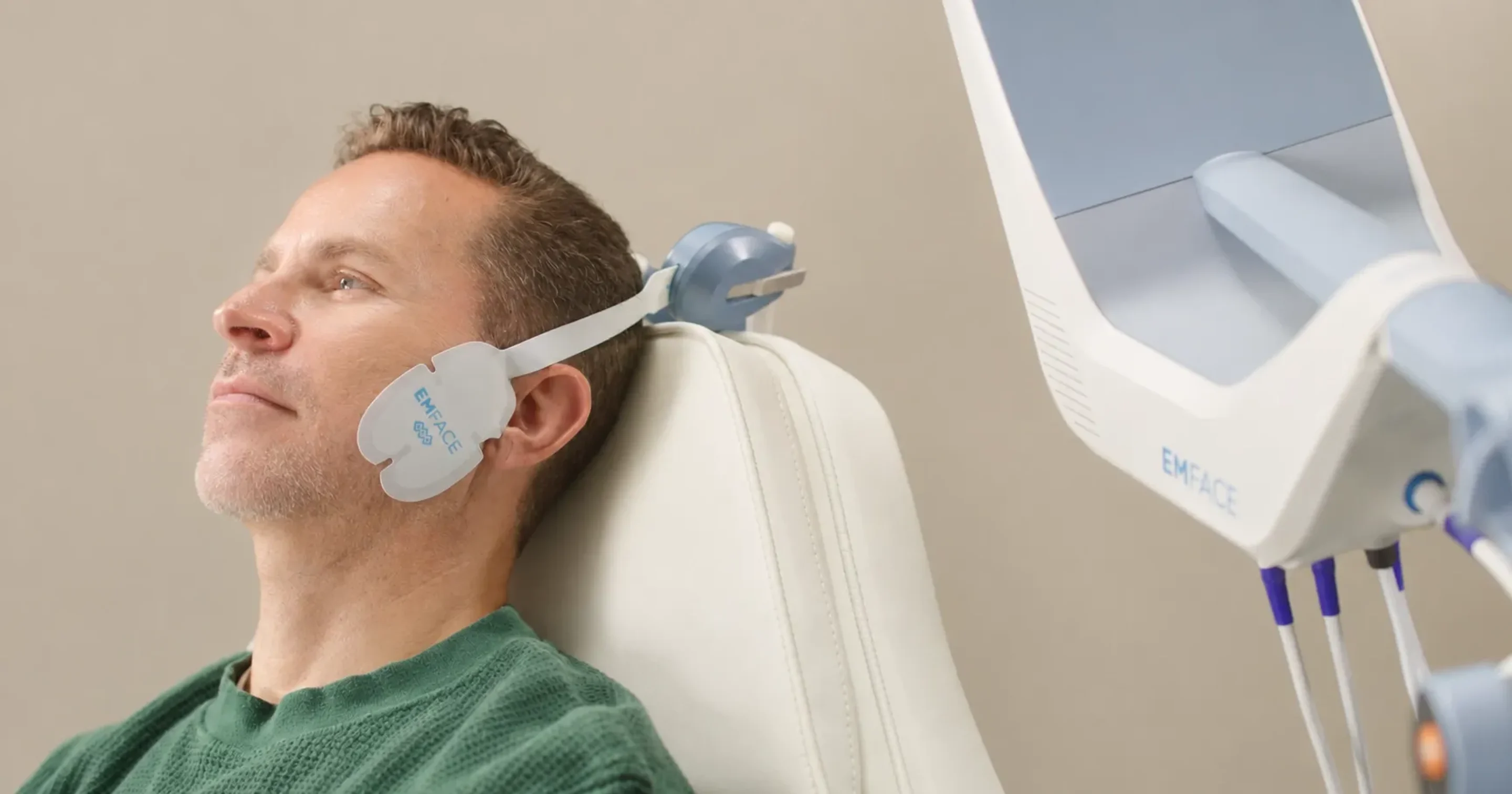
At The Haven Wellness Retreat in Raleigh, NC we run BTL's dedicated four session Emface TMJ protocol, which targets the masseter muscle directly without needles, alongside massage for the associated neck and shoulder tension.
Why Jaw Tension Happens
Understanding the Root Causes
01The Science
The masseter is one of the strongest muscles in the body relative to its size, and like any muscle it responds badly to sustained overuse. Clenching and grinding, especially during sleep, keep it contracted for hours at a time, producing exactly the kind of fatigue and tenderness you would expect from any muscle held under load overnight.
Stress is the most common driver of that clenching, and the relationship runs both ways: tension causes clenching, clenching causes pain, and pain increases tension. Many people are entirely unaware they clench until a dentist points out the wear on their teeth or their partner mentions the grinding.
Structural factors contribute in a minority of cases: an uneven bite, previous jaw trauma, displacement of the articular disc within the joint, or arthritis affecting the joint surfaces. The National Institute of Dental and Craniofacial Research is the authoritative reference here.
02Deeper Understanding
Muscular Jaw Tension vs Joint Disorder
Why the Distinction Determines the Right Care
These need different care and it is worth knowing which you have. Muscular TMJ presents as aching along the jaw and temple, tenderness when you press the masseter, tension headaches, and jaw fatigue after chewing. The muscle is overworked. This is the pattern that responds to muscle directed treatment.
Joint related TMJ is different. Here the problem lies within the joint itself: disc displacement producing clicking or popping, limited opening, locking, or degenerative change in the joint surfaces. Pain is more localized to the joint just in front of the ear, and treating the muscle alone does not resolve it.
Most cases have elements of both, which is why a dentist or physician assessment is genuinely useful before starting anything. We treat the muscular component. If your jaw locks, if opening is significantly limited, or if the joint itself is the source, you need a dentist or an oral and maxillofacial specialist, and we will say so.
What Makes Jaw Tension Worse?
These are the factors that most reliably increase clenching load or joint irritation.
- 01Stress and AnxietyThe most common driver of clenching, and often entirely unconscious until someone points it out.
- 02Night GrindingBruxism during sleep keeps the masseter contracted for hours, which is why mornings are usually worst.
- 03Poor Sleep PositionSleeping on your front or with a hand under your jaw applies sustained pressure to the joint.
- 04Chewing GumContinuous gum chewing keeps an already overworked masseter under load throughout the day.
- 05Desk PostureForward head posture at a screen loads the neck and jaw muscles together as one chain.
- 06Hard and Chewy FoodsTough meat, bagels, ice and hard candy all place high repeated demand on the joint and muscle.

Why Choose The Haven Wellness Retreat for TMJ Treatment Care in Raleigh, NC
We treat the muscular side of jaw tension without needles, and we are clear about where that stops.
- Dedicated TMJ Protocol
- BTL's four session Emface protocol targeting the masseter specifically
- No Injections
- A needle free route for clients who do not want neurotoxin in the jaw
- Whole Chain Approach
- Massage available for the neck and shoulder tension that travels with it
- Clear Scope
- We treat muscle and refer joint problems to a dentist or specialist
Treatment Options Comparison
Compare the treatments at The Haven that address muscular jaw tension and the tension that travels with it.
| Treatment | Best For | Session Time | Results Timeline | Maintenance |
|---|---|---|---|---|
| Emface | Masseter tension and clenching | 20 minutes | 2 to 3 sessions | 6 to 12 months |
| Massage | Neck and shoulder tension | 60 minutes | Same session | Monthly |
| BioMat Far Infrared Therapy | Whole body muscular tension | 30 to 90 minutes | Same session | Weekly |
You May Have TMJ or Jaw Tension If...
Most people notice several of these, often having attributed them to something else entirely.
Morning Jaw Ache
Your jaw is sore or tired when you wake, which points strongly to night clenching.
Clicking or Popping
An audible click when you open or close your mouth, with or without pain.
Temple Headaches
Headaches concentrated at the temples that are often mistaken for tension headaches.
Facial Widening
A squarer lower face over time as the masseter hypertrophies from overuse.
Ear Discomfort
Aching or fullness in the ear with no infection found, since the joint sits directly in front of it.
Neck and Shoulder Tension
Persistent tightness that never quite resolves, because the chain works together.


Explore More Related Services
Experience the Emface Difference
Synchronized radiofrequency and facial muscle stimulation, with no needles and no downtime.
- No Needles
- Twenty Minutes
- FDA Cleared
Explore More Related Services
Experience the Emsella Difference
Sit fully clothed while HIFEM technology contracts the pelvic floor thousands of times.
- Stay Fully Clothed
- Thousands of Kegels
- FDA Cleared
Explore More Related Services
Experience the RF Microneedling Difference
Exion Face and Body radiofrequency microneedling across face, neck, body and hands.
- Works at Depth
- Face and Body
- Collagen Remodeling



Your Questions
Frequently Asked Questions
Can I prevent jaw tension from getting worse?
How do I know which treatment is right for me?
How quickly will I see improvement?
Is it normal for jaw tension to develop in my thirties?
Can stress really cause jaw pain?
What can I do at home between treatments?
Can multiple treatments be combined?
When should I see a dentist or physician about TMJ?
Schedule Today Your TMJ and Jaw Tension Consultation
Scientific References
- Kinney et al., Aesthet Surg J. (2023). Novel Technology for Facial Muscle Stimulation Combined With Synchronized Radiofrequency Induces Structural Changes in Muscle Tissue: Porcine Histology Study. PMID: 36883601.
- Goldberg et al., J Cosmet Dermatol. (2024). Treatment with synchronized radiofrequency and facial muscle stimulation: Histologic analysis of human skin for changes in collagen and elastin fibers. PMID: 38468421.
- Amorim et al., J Manipulative Physiol Ther. (2018). Effect of Physical Therapy in Bruxism Treatment: A Systematic Review. PMID: 30041736.
- Khan et al., BMC Musculoskelet Disord. (2022). Effect of post-isometric relaxation versus myofascial release therapy on pain, functional disability, rom and qol in the management of non-specific neck pain: a randomized controlled trial. PMID: 35698187.
- National Institute of Dental and Craniofacial Research. (2023). TMJ disorders overview covering symptoms, causes and treatment approaches.