
Acne Scar Treatment in Raleigh, NC: Smoother Texture and Fewer Marks
Smoother texture and fewer marks with collagen induction
- Common In:
- Adults with a history of acne
- Primary Causes:
- Follicle rupture, inflammation, picking
- Treatment Time:
- 45 to 60 minutes
- Results:
- 3 to 6 months

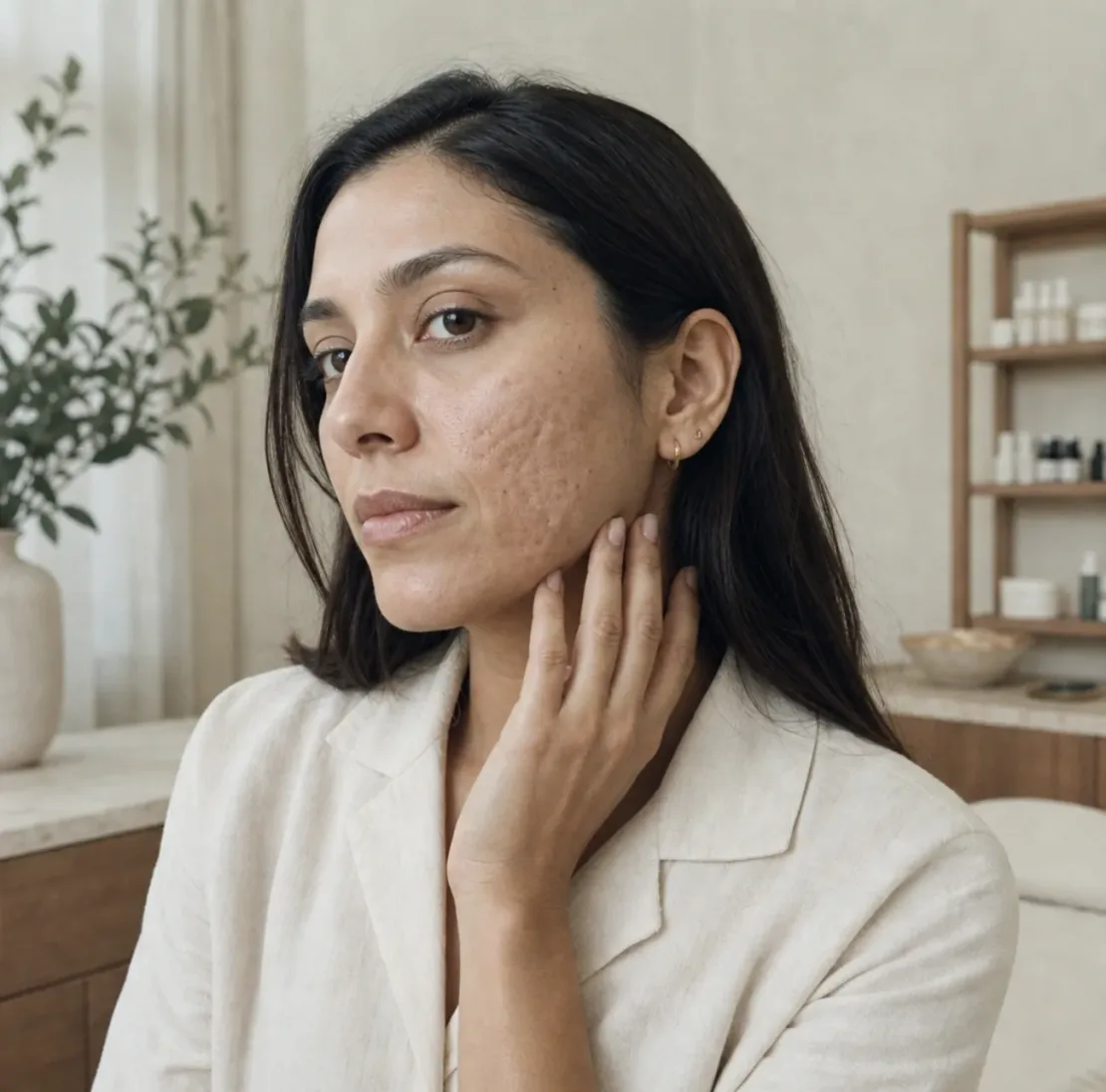
What Causes Acne Scars and Uneven Texture?
Recognizing the Signs
Acne scars form when inflammation ruptures a follicle deep in the skin and the healing that follows either loses collagen or overproduces it. The result is a permanent change in the skin's surface architecture, quite different from the flat dark marks that acne also leaves behind.
That distinction matters more than almost anything else here. Post inflammatory hyperpigmentation is discoloration without texture change, and it fades over months on its own. True scarring is indented or raised and does not resolve without treatment.
At The Haven Wellness Retreat in Raleigh, NC we treat atrophic scarring with microneedling for collagen induction, and with RF microneedling where scarring is deeper and radiofrequency at depth is warranted.
Why Acne Scars Form
Understanding the Root Causes
01The Science
Inflammation is the driver. When a follicle wall ruptures beneath the surface, its contents spill into the dermis and provoke a substantial immune response. The deeper and more prolonged that inflammation, the more likely the healing process is to go wrong.
Atrophic scars, the indented type, form when the healing response produces too little collagen to fill the defect. They come in three recognized forms: ice pick scars, which are narrow and deep, boxcar scars with sharp defined edges, and rolling scars which produce a wavy undulating surface from tethering beneath.
Hypertrophic and keloid scars are the opposite problem, where too much collagen is produced and the scar sits raised above the skin. These are more common on the chest, back and jawline. Reviews of treatment options for acne scarring set out which approaches suit which scar type, and the American Academy of Dermatology is a good reference.
02Deeper Understanding
Marks vs Scars, and Why It Changes the Plan
Knowing Which One You Actually Have
People frequently arrive convinced they have scarring when what they actually have is discoloration, which is good news because the two are treated completely differently.
Post inflammatory hyperpigmentation is flat. Run a finger over it and the skin is smooth. It is a brown or red mark left behind where inflammation stimulated pigment production, and it fades over three to twelve months on its own, faster with sun protection and brightening treatment. If this is what you have, our hyperpigmentation page covers the right approach.
True scarring has texture. You can feel an indentation or a raised area, and it is most visible in angled light rather than flat light. This does not fade with time and requires collagen induction to improve. A simple test is to look at the affected area in bright direct light and then in side lighting: marks look the same, scars look dramatically worse in side light.
What Makes Acne Scarring Worse?
Scarring risk is largely determined by what happens during and after the active acne.
- 01Picking and SqueezingDeepens follicle rupture and extends inflammation, and it is the largest preventable cause of scarring.
- 02Delayed Acne TreatmentThe longer inflammation continues untreated, the greater the collagen damage and scarring risk.
- 03Deep Cystic LesionsNodules and cysts sit deeper in the dermis and scar far more readily than surface comedones.
- 04Genetic PredispositionSome people scar more readily from equivalent inflammation, and family history is a reasonable guide.
- 05Sun ExposureDarkens the discoloration around scars, making texture appear worse than it structurally is.
- 06Ongoing Active AcneNew lesions continually create new scarring, which is why active acne is treated before scarring.

Why Choose The Haven Wellness Retreat for Acne Scar Treatment Care in Raleigh, NC
Scar treatment only works when the active acne is controlled first, and when expectations match the scar type.
- Two Microneedling Options
- Needle only and RF, chosen to match your scar depth rather than upsold
- Correct Sequencing
- We treat active acne before scarring, because new lesions create new scars
- Honest About Ice Pick
- We say plainly that deep narrow scars need dermatology, not microneedling
- Realistic Session Counts
- Five or six sessions quoted upfront rather than starting with one
Treatment Options Comparison
Compare the treatments at The Haven that improve acne scarring and uneven skin texture.
| Treatment | Best For | Session Time | Results Timeline | Maintenance |
|---|---|---|---|---|
| Microneedling | Atrophic scars and general texture | 45 minutes | 4 to 6 weeks | 4 to 6 weeks apart |
| RF Microneedling | Deeper scarring and laxity | 45 to 60 minutes | 4 to 6 weeks | Annual maintenance |
| Microdermabrasion | Surface texture and marks | 90 minutes | 4 to 6 sessions | Every 6 to 8 weeks |
| Custom Facials | Controlling active acne first | 60 to 75 minutes | Same day | Every 2 to 4 weeks |
You May Have Acne Scarring If...
These observations point toward textural scarring rather than discoloration.
Visible Indentations
Small depressions or pits you can see and feel across the cheeks or temples.
Worse in Side Lighting
Skin looks noticeably rougher in angled light than in flat direct light.
Wavy Surface Texture
An undulating rolling appearance rather than discrete individual pits.
Makeup Sits Unevenly
Foundation settles into depressions rather than covering them smoothly.
Enlarged Looking Pores
Widened follicular openings alongside the scarring, often on the cheeks and nose.
Texture Not Fading
Changes that have persisted unchanged for a year or more since the acne cleared.



Explore More Related Services
Experience the Microneedling Difference
BTL collagen induction therapy, a gentler needle only route with shorter downtime than RF.
- Short Downtime
- Uses Your Own Collagen
- Suits Most Skin Types
Explore More Related Services
Experience the RF Microneedling Difference
Exion Face and Body radiofrequency microneedling across face, neck, body and hands.
- Works at Depth
- Face and Body
- Collagen Remodeling
Explore More Related Services
Experience the Emsella Difference
Sit fully clothed while HIFEM technology contracts the pelvic floor thousands of times.
- Stay Fully Clothed
- Thousands of Kegels
- FDA Cleared



Your Questions
Frequently Asked Questions
Can I prevent acne scarring from getting worse?
How do I know which treatment is right for me?
How quickly will I see improvement?
Is it normal for texture to remain after acne clears?
Can sun exposure affect my acne scars?
What can I do at home between treatments?
Can multiple treatments be combined?
When should I see a dermatologist about scarring?
Schedule Today Your Acne Scars and Texture Consultation
Scientific References
- Hou et al., Dermatol Surg. (2017). Microneedling: A Comprehensive Review. PMID: 27755171.
- Atiyeh et al., Aesthetic Plast Surg. (2021). Microneedling: Percutaneous Collagen Induction (PCI) Therapy for Management of Scars and Photoaged Skin-Scientific Evidence and Review of the Literature. PMID: 32875437.
- Tan et al., Dermatol Surg. (2021). Radiofrequency Microneedling: A Comprehensive and Critical Review. PMID: 33577211.
- Wu et al., PeerJ. (2025). Optimal treatment options for acne scars in patients with historic acne: a systematic review and network meta-analysis. PMID: 41081097.
- American Academy of Dermatology. (2024). Acne scar treatment options, scar types and what results to expect.