
Benefits of Colon Hydrotherapy: What to Expect and How Often to Go
The benefits of colon hydrotherapy that clients actually report, what the evidence does and does not support, what happens step by step in a first session, and how often to go.
The benefits of colon hydrotherapy are most often described in terms of feeling lighter, less bloated and more comfortable, and that is what the majority of clients report the same day. This article covers what a session actually is, which benefits are well supported and which are overstated, exactly what happens during a first appointment, and how often to go. If you are considering booking and want an honest picture rather than a sales pitch, this is written for you.
What Colon Hydrotherapy Actually Is
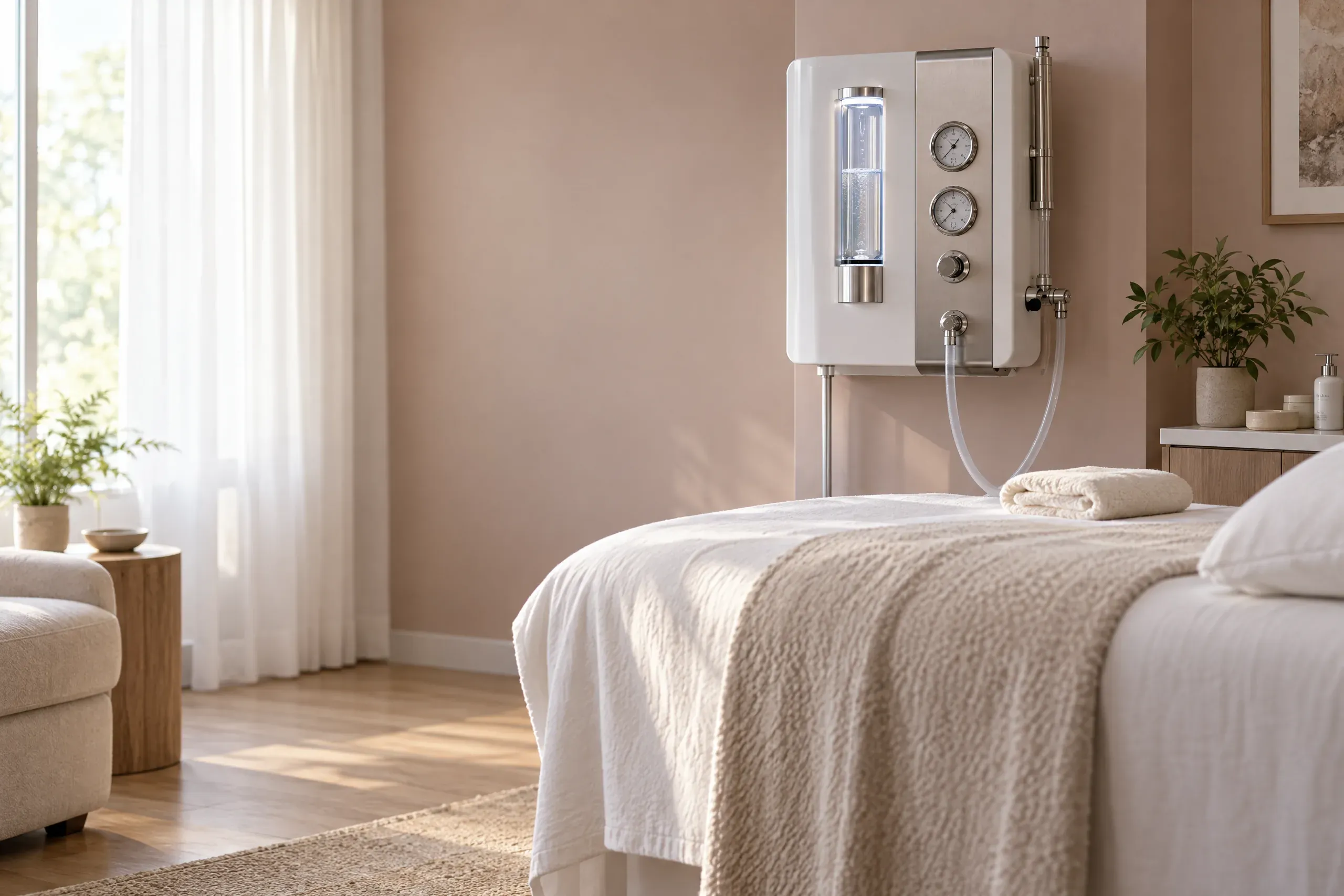
Colon hydrotherapy, also called colonic irrigation, is the controlled introduction of warm, filtered water into the large intestine through a small disposable rectal tube, followed by gentle release of water and waste. It is performed on a closed system device, which means everything stays contained: there is no odor and no mess.
Two things distinguish it from what people usually try first. Unlike a laxative, nothing chemical is involved and nothing stimulates the bowel pharmacologically. The mechanism is entirely mechanical: water softens compacted stool and gently distends the colon wall, which triggers peristalsis, the natural muscular wave that moves contents along. Unlike an at home enema kit, a professional session reaches considerably further into the colon and is delivered in fill and release cycles across an hour, with a trained therapist adjusting water temperature and flow throughout.
Clinicians have used colonic irrigation in medical settings for decades, and a review in Techniques in Coloproctology traced its path from beauty settings into clinical use. Our colon hydrotherapy in Raleigh sessions run about an hour in a private room with an ensuite restroom.
The Benefits People Report, and What the Evidence Supports
It is worth separating these two things clearly, because the gap between them is where most of the misleading marketing in this industry lives.
Digestion and Regularity
This is the best supported benefit and the most commonly reported. Clearing accumulated waste from the colon has an immediate mechanical effect, and clients dealing with infrequent or incomplete bowel movements often notice improved regularity in the days following a session. For long standing irregularity, a short series of three to six sessions tends to produce a more durable change than a single visit.
Chronic constipation itself is a well characterized clinical problem, and published guidance in Nature Reviews Gastroenterology and Hepatology sets out the diagnostic and treatment framework. If your irregularity is persistent, that framework is worth knowing about, and it is a good reason to involve a physician alongside anything we do.
Bloating and Energy
Most clients leave a session feeling flatter and lighter through the abdomen, often noticeably so within the hour. Bloating and abdominal distension are extremely common complaints, and clinical practice updates in Gastroenterology have addressed their evaluation and management specifically. Reduced abdominal volume produces a genuine change in comfort, and many people describe an energy lift alongside it.
Here is the honest caveat: the claim that colon hydrotherapy removes accumulated toxins or years of impacted matter is not supported by evidence, and reputable practitioners do not make it. The benefits are real but they are mechanical and comfort based rather than detoxifying in the way the marketing often implies.
How It Fits Into a Wider Detox Program
Colon hydrotherapy works better as part of something than as an isolated event. Anything the liver processes still has to leave the body through the bowel, which is why clients on a holistic detox program frequently book a session at the start and again at the midpoint.
The dietary and habit side is what makes a change last. A single session gives relief. A guided program addresses why the bloating keeps returning. Our detox and cleansing category covers both.
What to Expect During Your First Session
Most people are nervous before a first appointment, so here is the sequence in full.
- Intake. Your therapist reviews your health history, medications and digestive goals. This is a screening step as much as a conversation: several conditions make the session inappropriate, and we would rather find that out now.
- Settling in. You change in a private room with its own restroom and lie on a comfortable table, draped throughout.
- Insertion. A small single use tube is gently placed. This step takes seconds and is self directed, which surprises most people.
- Fill and release. Warm filtered water fills and releases in cycles across roughly 40 minutes, while your therapist massages the abdomen to help the bowel let go. You may feel mild cramping during fill cycles, which passes as soon as release begins.
- Aftercare. You use the private restroom, then talk through hydration, food for the rest of the day and whether a follow up makes sense.
The Coffee Enema Add On
A coffee enema is an optional add on performed after the colonic, in which a small volume of cooled organic coffee is retained briefly in the lower bowel. Clients typically choose it as part of a wider detox routine. It is optional, it is discussed at intake, and it is not appropriate for everyone.
How Often Should You Get a Colonic
This depends entirely on your goal, and anyone who gives a single universal answer is guessing.
- For a reset: one session, often followed by a second a week later.
- For long standing irregularity: three to six sessions across several weeks. This is where the meaningful change usually happens.
- For maintenance: monthly or seasonal sessions, depending on how you respond.
- Alongside a detox program: typically at the start and midpoint of the protocol.
Going more frequently than this offers no clear additional benefit and is not something we encourage. If you are dealing specifically with digestive distension, our page on bloating relief covers the wider picture including diet, transit time and gut sensitivity.
Who Should Not Have Colon Hydrotherapy
This matters more than the benefits section, and it is where honest practices differ from careless ones. Colon hydrotherapy is not appropriate with:
- Pregnancy or the immediate postpartum period
- Active inflammatory bowel disease, a diverticulitis flare or recent bowel surgery
- Severe hemorrhoids, anal fissure, rectal bleeding, or known rectal or colon tumors
- Congestive heart failure, severe uncontrolled hypertension, kidney disease or cirrhosis
- Recent heart attack, severe anemia, or an abdominal hernia
Documented complications, though uncommon, include electrolyte disturbance, bowel perforation and infection, and they are most often associated with unsterile equipment, excessive water pressure or treating someone with an existing bowel condition. This is precisely why intake screening and certified operators matter. Anyone with unexplained abdominal pain, weight loss or bleeding should see a physician before booking anything.
Frequently Asked Questions
How often should you get a colonic?
It depends on your goal. One session for a reset, three to six over several weeks for long standing irregularity, and monthly or seasonal visits for maintenance. Clients on a detox program typically book at the start and midpoint. More frequent than that has no clear additional benefit.
Is colon hydrotherapy safe?
For screened, generally healthy adults it has a good safety record when performed by a certified therapist on FDA cleared closed system equipment with single use tubing. It is not appropriate during pregnancy, with active bowel disease, recent bowel surgery, severe hemorrhoids or several cardiac and kidney conditions.
Does colon hydrotherapy hurt?
Most clients describe it as unusual rather than painful. You may feel mild cramping or pressure during fill cycles, which passes as soon as the release cycle begins. Your therapist controls water temperature and flow throughout and adjusts immediately if anything is uncomfortable.
How long does a colon hydrotherapy session take?
About 60 minutes in the room, plus a few minutes either side for intake and aftercare. A first appointment runs longer because it includes a full health history and an explanation of the equipment before anything begins.
What should I eat before and after a colonic?
Keep the day before light: cooked vegetables, soups, broths and plenty of water, avoiding alcohol and carbonated drinks. Stop eating about two hours before. Afterward, stay with warm simple food such as soup or steamed vegetables for the rest of the day and keep drinking water.
Book Your Colon Hydrotherapy Session in Raleigh
First time clients get a longer appointment that includes a full consultation, because the first session is as much education as treatment. Every therapist on our team is formally certified. Call (919) 900-7405 or book colon hydrotherapy online.
References
- Bazzocchi et al., Tech Coloproctol. (2017). Irrigation, lavage, colonic hydrotherapy: from beauty center to clinic?. PMID: 28091749.
- Rao et al., Nat Rev Gastroenterol Hepatol. (2016). Diagnosis and management of chronic constipation in adults. PMID: 27033126.
- Moshiree et al., Gastroenterology. (2023). AGA Clinical Practice Update on Evaluation and Management of Belching, Abdominal Bloating, and Distention. PMID: 37452811.
- Taffinder et al., Colorectal Dis. (2004). Retrograde commercial colonic hydrotherapy. PMID: 15206969.
- National Institute of Diabetes and Digestive and Kidney Diseases. (2018). Definition, causes and treatment options for constipation in adults.